
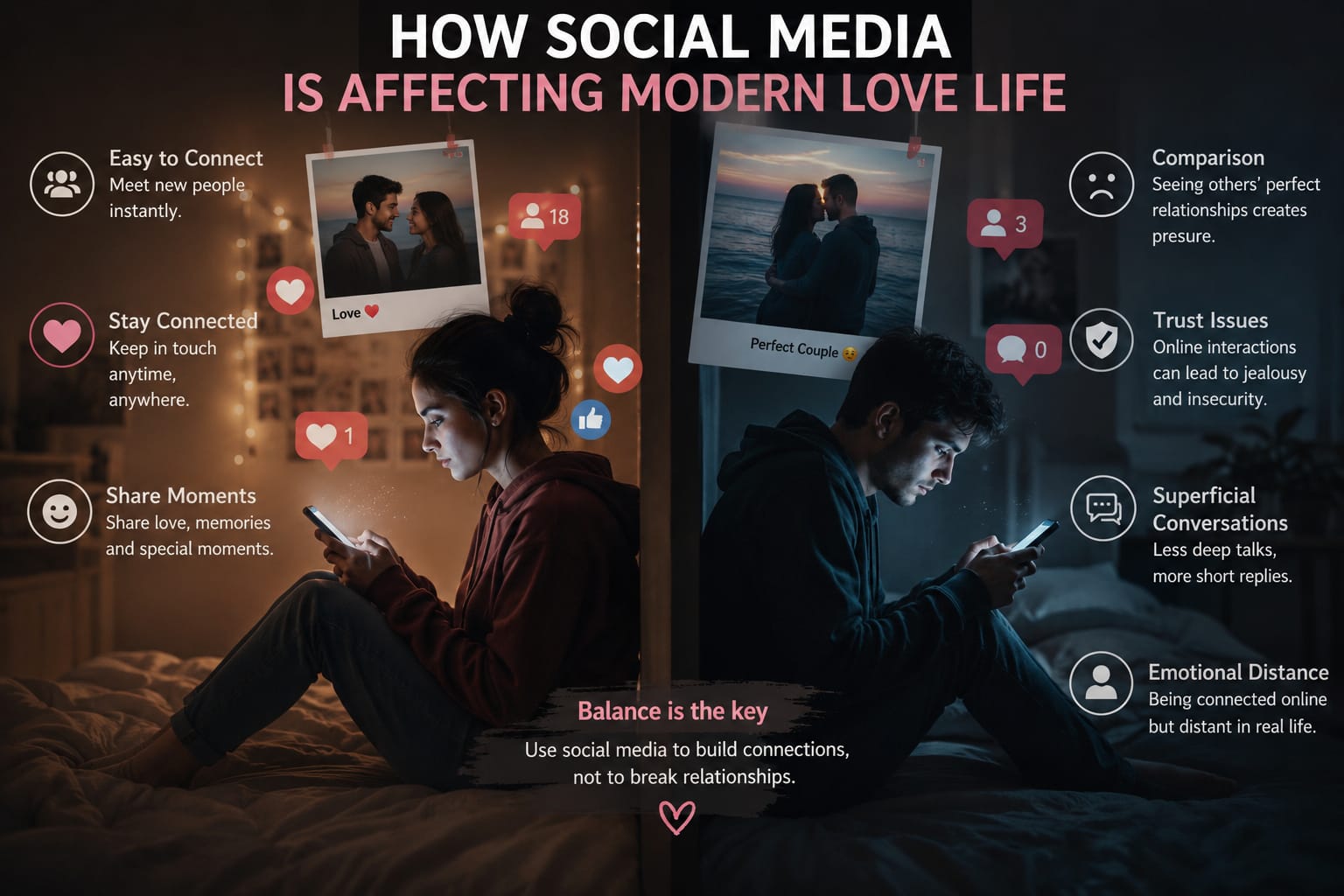
How Social Media Is Affecting Modern Love Life
Social media has transformed modern relationships by making communication easier and love more accessible. At the same time, it has increased insecurity, comparison, trust issues, and emotional distance in many relationships. Online validation and constant digital interaction often affect emotional peace and loyalty. Healthy relationships today still depend on trust, honesty, communication, and genuine emotional connection rather than social media appearances.
1. Introduction
Social media has completely changed the way people connect, communicate, and build relationships. Earlier, relationships mostly depended on face-to-face meetings, phone calls, and spending time together physically. But today, one follow request, one message, or even one story reply can start an entire relationship. Platforms like Instagram, Snapchat, WhatsApp, Facebook, and dating apps have made communication faster and easier than ever before. People can now connect with anyone from anywhere in the world within seconds. While this has created many opportunities for love and connection, it has also created emotional challenges that were not common before. Modern relationships are now heavily influenced by online attention, likes, followers, online activity, and digital communication habits. Many couples feel emotionally connected through social media, while others suffer from insecurity, overthinking, trust issues, and emotional distance because of it. Some relationships become stronger online, while others slowly become toxic and emotionally exhausting. Social media has become a major part of modern love life, and understanding its effects is important for building healthy and emotionally balanced relationships.
2. Social Media Has Made Love More Accessible
One of the biggest changes social media brought into modern relationships is accessibility. Earlier, meeting new people depended on schools, colleges, workplaces, family connections, or local social circles. But today, people can meet and connect instantly through social media platforms and dating apps. A simple message can begin a friendship, emotional bond, or even a serious relationship. Long-distance relationships have especially benefited from technology because couples can stay connected through video calls, voice notes, chats, pictures, and shared online activities. Social media allows people to communicate throughout the day even when they live far away from each other. This constant communication helps many couples maintain emotional closeness. Many successful relationships today started online through shared interests, conversations, or mutual followers. Technology has made it easier for introverts and shy people to express feelings comfortably as well. Social media has reduced communication barriers and created opportunities for emotional connection that were difficult in the past. However, while connection has become easier, emotional depth and genuine understanding still require effort, honesty, and maturity.
3. Attention and Validation Are Changing Relationship Dynamics
Modern social media culture has created a strong desire for online validation. Many people today measure confidence and self-worth through likes, comments, followers, and attention from others online. This validation culture directly affects relationships because people often become emotionally dependent on online reactions. Some individuals constantly seek attention through pictures, stories, flirting in comments, or chatting with multiple people. This behavior creates insecurity and emotional discomfort in relationships. Partners may begin feeling ignored or emotionally unimportant when online attention becomes a bigger priority than real emotional connection. Social media sometimes encourages people to focus more on appearance and popularity rather than emotional loyalty and communication. Couples may start fighting over online activity, story views, or interactions with other people. Emotional peace slowly disappears when relationships become dependent on online validation instead of trust and emotional understanding. Real relationships need emotional presence, respect, and effort, not just public attention and digital admiration.
4. Comparison Culture Is Creating Relationship Insecurity
One of the most damaging effects of social media is constant comparison. Every day people see couples posting romantic pictures, expensive gifts, luxury trips, cute captions, and “perfect relationship” moments online. While these posts may look beautiful, they rarely show the real struggles behind relationships. Most couples do not post arguments, emotional pain, misunderstandings, stress, or insecurities. As a result, many people begin comparing their own relationships with unrealistic online images. They start questioning their partner, emotional connection, or relationship quality because it does not look as glamorous as what they see online. This comparison creates dissatisfaction and insecurity. Some people feel unloved simply because their partner does not post them publicly or behave in dramatic romantic ways online. But real love is not measured by Instagram stories or social media captions. Healthy relationships are built through trust, loyalty, emotional safety, support, and understanding. Constant comparison destroys appreciation and creates unnecessary emotional pressure in relationships.
5. Trust Issues Have Increased in Modern Relationships
Social media has made trust more complicated than before. Earlier, couples mainly worried about real-life interactions, but today even online activity can create emotional tension and overthinking. Following certain people, liking photos, replying to stories, hiding chats, or staying online late at night often become reasons for arguments. Many couples now experience stress because of digital behavior rather than real problems. Some people constantly check their partner’s activity, followers, comments, or online status. This behavior increases insecurity and emotional exhaustion. Social media provides visibility, but too much visibility also creates suspicion. Overthinking becomes common when communication is weak or emotional trust is missing. Many relationships suffer because partners assume things instead of communicating openly. Trust today requires emotional maturity, honesty, consistency, and respect for boundaries. Without these qualities, social media can quickly damage emotional peace and relationship stability.
6. Communication Has Become Faster but Emotionally Weaker
Today people communicate constantly through texting, voice notes, emojis, and reels, but emotional understanding is often weaker than before. Many modern relationships depend mostly on online communication instead of deep conversations. While texting is convenient, it cannot fully express emotions, tone, seriousness, or emotional needs. Small misunderstandings easily become bigger problems because digital communication lacks emotional clarity. Delayed replies, dry texting, short answers, or ignored messages often create overthinking and insecurity. Many people now feel emotionally connected online but emotionally distant in real life. Couples may talk all day digitally while still struggling with genuine emotional understanding. Healthy communication requires listening, honesty, emotional vulnerability, and mature conversations. Social media communication is fast, but emotional connection still needs patience and real understanding. Strong relationships cannot survive only through constant texting; they need meaningful emotional effort as well.
7. Online Attention Is Affecting Loyalty and Commitment
Social media has made attention easily available, and this has affected modern loyalty. Many people today enjoy receiving attention from strangers online even while being in relationships. Flirting through comments, chatting secretly, or seeking validation from multiple people weakens emotional commitment. Some individuals stay physically loyal but emotionally disconnected because their attention is constantly divided online. Emotional cheating has become more common in modern relationships due to digital communication. Social media creates temptation and emotional distraction because people always feel there are endless options available. This mindset sometimes makes commitment feel less valuable. Real loyalty is not only about avoiding physical cheating; it is also about emotional honesty, respect, and maintaining healthy boundaries online. A strong relationship requires emotional focus and genuine effort, even in a world full of online distractions.
8. Social Media Can Also Strengthen
. Relationships
Despite its negative effects, social media is not completely harmful. When used wisely, it can actually strengthen relationships. Couples can stay emotionally connected through daily communication, supportive messages, shared memories, and online bonding activities. Long-distance couples especially benefit from video calls, voice messages, online movie dates, and constant emotional support through technology. Social media also allows couples to celebrate achievements, express affection, and maintain communication during busy schedules. Technology itself is not the real problem. The problem begins when people misuse social media or allow online attention to become more important than emotional connection. Emotionally mature couples use social media as a tool for communication rather than a source of insecurity and conflict. Healthy digital habits can improve relationships instead of damaging them.
9. Conclusion
Social media has completely transformed modern love life. It has made communication easier, relationships more accessible, and emotional connection possible across long distances. At the same time, it has also increased comparison, insecurity, overthinking, trust issues, and emotional confusion. Modern relationships now face challenges that previous generations never experienced. Likes, followers, online activity, and public validation often influence emotional stability and relationship satisfaction. However, social media itself is not completely responsible for relationship problems. The real difference comes from emotional maturity, communication, trust, and how people choose to use technology in their relationships. Healthy relationships still depend on honesty, loyalty, respect, emotional understanding, and genuine effort. Real love is not about posting perfect pictures online or constantly proving affection publicly. It is about emotional safety, peaceful communication, mutual support, and feeling valued in real life. In the end, meaningful conversations, trust, and emotional connection will always matter more than online appearances and temporary social media attention.